
10 Years, 10 Lessons: Trust Is Built Through Action

By: Steve Wanta ● Februrary 25, 2026
READ TIME: 15 minutes
“Everyone has a plan until they get punched in the mouth.” – Mike Tyson
In the last blog, I mentioned that I didn’t have a grand plan for how this was all going to work, only how I wanted people to feel.
After 10 years in global microfinance, the last thing I wanted to do was become a lender.
Instead, I planted a flag in the ground. JUST would be about less stress and more joy, the antithesis of microcredit.
The problem: I only knew how to lend money.
LESSON 2: Learn By Doing
If I wanted to build a community, I had to learn how. So I went looking in some unlikely places.
Fieldwork in a Basement 🔍
First stop: An AA meeting.
I attended an AA meeting with a friend. There, I saw instant, unconditional, and truly beautiful support from strangers. I became fascinated with the organization that was supporting people in their hardest moments. Anyone, anywhere in the world, at any time, can find someone who would answer the phone. There is a meeting of people on a shared journey always right around the corner.
But starting an organization that emulates a movement so large and established felt overwhelming. How could I build something more manageable?
Second stop: Weight Watchers.
Weight Watchers seemed more accessible. It was a business that could be studied. So I joined.
I enrolled in the Weight Watchers Community package. This meant I got the app with all the point tracking they are famous for. Plus, I could attend weekly weigh-ins. Side note: as a former wrestler who cut weight for half my adolescence, stepping on a scale in front of people was torture.
But through the experience, I discovered something fascinating. For a month, I went to lunch in the basement of the Scottish Rite Theater. It smelled musty but had a vibration of positivity. There was a buzz of optimism.
A firm but kind woman would greet me every week. I’d step on the scale, die a little inside, and she would log my weight. With my 5th pound lost, she gave me a sticker. I felt hopeful. Not because I lost 5 pounds but because I saw 60 other women on the same journey.
I’d sit down with my notebook in hand and listen. I took notes feverishly, trying to dissect what microcredit was not.
Women (yes, women. I never saw another man) would sit around and share stories about points, struggles, and most often, laugh. Remarkably, it was facilitated by a “Lifetime Member”. This was a person who hit her goal weight and kept it off for six months. She would never have to pay for a Weight Watchers membership again.
Weight Watchers understood community. You need role models to create social proof.
These experiences made it clear that JUST would need to do something. Anything. Three months in, and I was eager to move. But how?
The fact was, I only knew how to gather people if I gave them money. Inherently, I have always believed that value must be exchanged equally, or it won’t last. I was confident that lending people money would be the quickest way to learn.
So I went back to my roots. I decided to do what I knew. Lend money to entrepreneurs in groups. Only this time, I was going to make one change: Groups would be intimate with no more than ten female entrepreneurs.
But then again, how would we organize even three women?
Regardless of how well I spoke Spanish, I was still a white guy from Wisconsin. And if we’re going to lead with trust, representation was paramount. I needed a role model—someone from the community we hoped to serve.
I raised the Bat Signal. And the most amazing thing happened.
The LinkedIn DM That Changed Everything 💬
One day out of the blue, I got a message on LinkedIn.
It was from someone named Eli. We hadn’t met, but she worked for GAVA, an organization I met with earlier. She had the perfect person in mind.
Her mom.
Ivonne had just moved from Mexico to Austin three weeks earlier. For the past decade, she’d run a successful laundromat. She was a small business owner, a microfinance client, and a natural leader.
I met Ivonne on a picnic bench on a bright April afternoon for an interview. I asked her questions I always wanted to ask a microcredit borrower, but never felt like I got the full truth. When I would visit the field for Whole Foods Market’s foundation, borrower visits were organized and orchestrated.
Me: “Was the loan helpful?”
Ivonne: “Absolutely. It was the capital I needed to make lump sum investments to buy new washing machines that had to be replaced regularly because of the harsh Veracruz salt air.”
Me: “Did you like the group meetings?”
Ivonne: “Not really. I had to close my laundromat to attend the weekly meetings in the middle of the day. Normally, we would only go to the meetings to receive the loan. That’s when we celebrated with cake.”
Me: “What did you think of the overall experience?”
Ivonne: “The credit officer kept pushing us to grow. We were a good group without repayment problems, so we pushed back. We were only going to invite women we trusted.”
Me: “What about the interest rate?”
Ivonne: “It was fine. It is what we had.”
She remembered the rate as reasonable. Until we dug into the real cost. She was left shocked by her Mexican lender’s 80% APR. She simply needed something to compare it to.
At some point, the interview shifted. I stopped wondering if she’d fit and started hoping she’d join us for this uncertain ride. I began selling her on the vision for something different. I knew I needed her. She could build trust in a deep, real way that I could not.
I pitched the vision: We would learn together. The goal was to organize 100 women to borrow, invest, and learn together. We would hold weekly meetings and promise to make those meetings worth their while.
Ivonne’s response, “No problem.”
Then things got real.
"Probably the most profound and beautiful thing you can experience is hearing 106 people share their dreams.”
Learn By Doing 🎓
She started hustling. Her days as a Tupperware sales rep kicked in. She would talk to anyone, anywhere. She set a goal of 100 clients by May. I thought it would take her until August.
One group of 5.
Another group of 4.
Then another and another.
We followed the traditional microcredit model at first. Make a group show up together for 5 meetings in a row, and then we would give them $1,500.
It was hard. Really hard. But we were both unfazed. Every week we would meet at the Casita and ask each other, “What are we going to do next week?”
Could the combination of money and rich conversations lead to real change?
One thing was certain: people paid us back.
But I was still uncertain. What would it take to build something durable? So I asked a successful entrepreneur. He gave me advice that sticks with me today.
“Steve, it's easy. It is just a long ‘if-then’ statement. If you know where you want to go, just break it down to the most basic if-then statement you can.”
For me, the aspiration was ethereal and practical. Less stress. More joy.
So I backed it all the way to, “if we lend them money, then they will pay us back.” “If they meet with us, then it will be meaningful.” In 2016, that’s all I had.
So Ivonne and I focused on getting repaid and making it meaningful.
But we stalled at 80 entrepreneurs. Ivonne would travel from Le Madeline to Le Madeline meeting with anyone who showed interest. She and I were also going to 13 meetings across Austin from Monday to Thursday because Fridays were sacred. That’s when we’d ask ourselves, “What are we going to do next week?”
As we struggled to grow, we finally asked for help from our community. We shared our goal to reach 100 clients. They, like Ivonne’s group in Mexico, didn’t want to take on more risk. But they loved Ivonne and thought I was a little strange.
They helped. Each group decided to invite another person.
Before we knew it, we got to 100 (actually 106) pioneering JUST entrepreneurs by August. We lent $159,000 and had perfect repayment. No one ever missed a single weekly payment.
But something more important happened.
Dreams Drawn, Dreams Seen ✏️
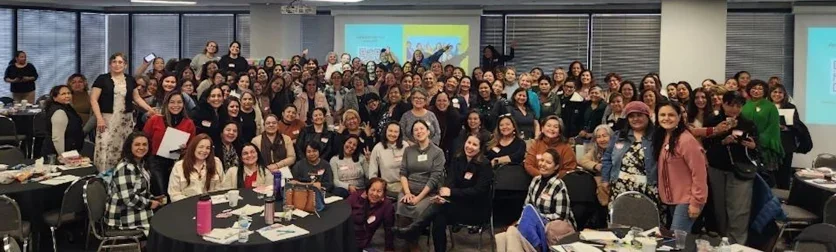
Probably the most profound and beautiful thing you can experience is hearing 106 people share their dreams. Over and over, I saw women who wanted more for their family and community.
But how?
At this point, I still did not want to become a lender. If you lend, you have to manage collections. And if you grow, you will have issues. Not to mention, the amount of money you need as a lender only grows.
But I saw real, true hope. We weren’t a lender. We were friends. We were a facilitator of conversations that never happened before. We manufactured mental slack for people under extreme stress. We laughed most often with a tear sprinkled in.
It was the founding of a true, authentic community. We learned so many experiences during this time.
Show up.
Try.
Ask questions.
Listen.
No surprises.
And most of all, we continually asked ourselves one question: “Does this build trust?”
The Human Impact 💗
Years later, those experiences would continue to bear fruit of inspiration and possibilities.
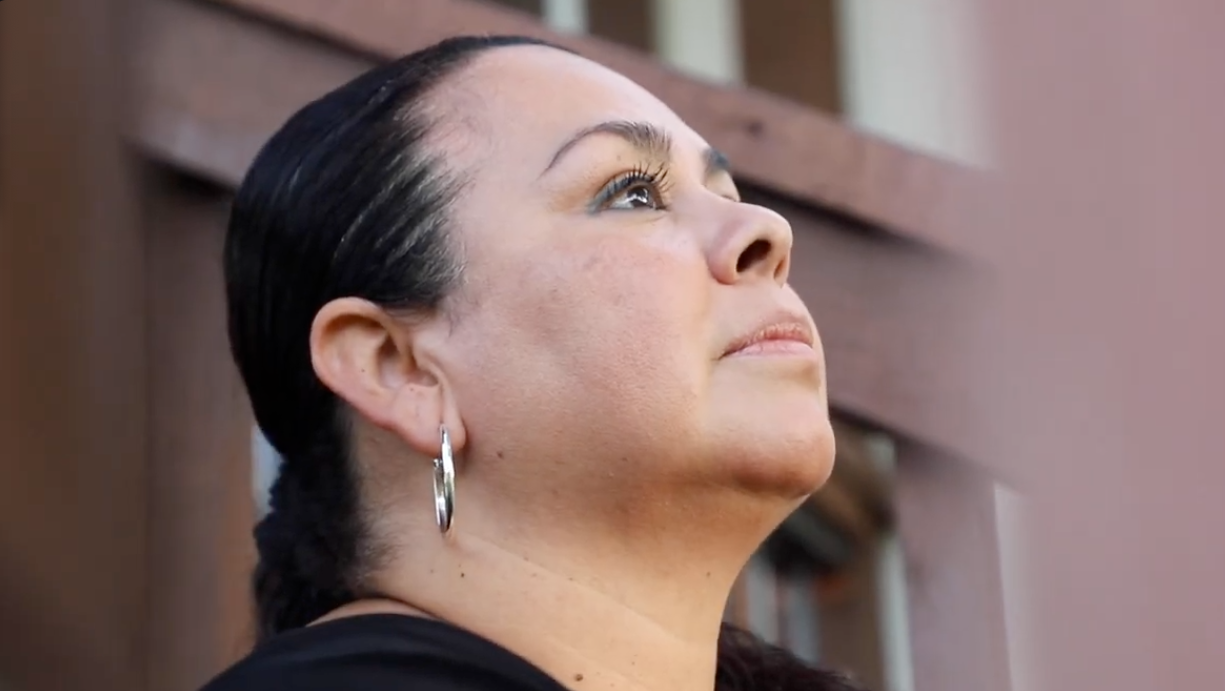
The first was Ivonne. She remains the champion of culture at JUST. She demonstrates that representation isn’t only important, it is the foundation of trust.
One of those first 106 entrepreneurs, Yisel, was able to start a jewelry business with her JUST loan. In fact, the money was so important that she learned to drive a car so she could attend our weekly meetings. More than once, she would ask me to park her car properly because reverse was not her strong suit. Yisel only knows forward.
More than once, she was robbed. But she trusted that Ivonne and I would give her a new loan. She grew, adjusted, and kept pushing her vision forward. Today, she is a success story of success stories. Yisel operates a thriving business with over 20 employees and two locations.
Yisel taught me to never underestimate.
Another entrepreneur, Ivonne—same name, different Ivonne—had her own dream. She drew a flea market stall with western apparel. Ivonne learned from her group that she could start a Facebook page as a way to expand her customer base. So she did, made little tweaks, and eventually moved from part-time employee to full-time entrepreneur.
Two years later, Entrepreneur Ivonne returned to an event with something to share. She showed her original drawing at the start of her journey. Then, from her handbag, she pulled out a photograph. It was her dream realized.
At that moment, so many things hit me. The initial work was not just about learning; it was about doing, and, more importantly, a vision drawn is a vision seen. Drawing her dream shifted something in her. Access to real money made a future more possible. It became crystal clear: Everyone joining JUST must draw their dream, no matter how hard it might be.
"I’ve fallen back in love with the potential of microcredit because I see it for what it promises. It is an amazing instrument of trust. With trust, we can move mountains. ”
The Breaking Point 🌡️
But we hit a wall. Ivonne and I could not attend 14 meetings every week if we hoped to build a community capable of more. We needed a new if-then statement.
What we experienced was clear. Stress. Endlessly navigating traffic for the rest of our lives would be exhausting. It’d be impossible to deliver less stress and more joy.
We also heard from our Pioneers. They wanted to support their community. They were also supremely capable of leading. Ivonne and I learned just as much as we taught. Together we were stronger.
Something had to give.
So I went to Bill, one of JUST’s cofounders. I had two ideas for the future. He put up the money, so I felt it was only fitting that he decided.
Option A: Abandon lending and pick one or two businesses capable of helping the community and becoming profitable. I called it micro-private equity.
Option B: Build a new model of microcredit that could stay small and intimate with the promise to bring less stress and more joy. I called it the JETA (JUST Entrepreneur Trust Agent).
He chose B.
Today, I’ve fallen back in love with the potential of microcredit because I see it for what it promises. It is an amazing instrument of trust. With trust, we can move mountains. It offers a tangible and often inaccessible resource: money.
The hope is no longer to scale the transaction of money. It is now the promise of trust, relationships, and community that can lead to human transformation.
The Lesson: Trust Isn’t Theoretical. You Have to Do to Learn. 🧠
I’ve come to believe two things from that chapter of JUST’s history:
Trust requires deep lived experience.
It doesn’t show up magically because you hired the right person. It shows up because you showed up consistently.To learn, you must do.
You can’t plan your way to community. You build it through action, mistakes, reflection, and iteration.
The earliest version of JUST wasn’t perfect. It didn’t need to be. But it was alive. And that’s what gave us the clarity and momentum to build something new. Each seed we planted on JUST’s years-long journey continues bearing fruit of inspiration and possibilities.
For the Future of JUST 🚀
We still ask ourselves, “Does this build trust?” Our context has changed, but our roots have not. Fortunately, we have more data and sophisticated tools to experiment with. Yet, we maintain a beginner's mind.
The future holds much of the same promise since our inception. Lead with trust and the rest will follow.
The Tool: Lean Canvas Map 🛠️
This is a simple, 1-page tool for translating your ideas into low-risk experiments. It’ll guide you to define:
What you're trying to learn
What assumptions you’re testing
What actions to take (your “if-then”s)
What success looks like
🧰 Download the tool here
👉 Lean Startup Experiment Map by Strategyzer
Dig Deeper 🎥
What's Next in the Series? 👣
We have a community and a new plan. But how do you build something that has never existed?
Ask a friend, or in our case, 106 friends, for help.
In the next blog, I'll share how we restarted to launch the JETA training program with almost certainty that it would fail. This is a story of first steps and building together.
Learn from other female entrepreneurs
Receive event notifications when we are in your city!